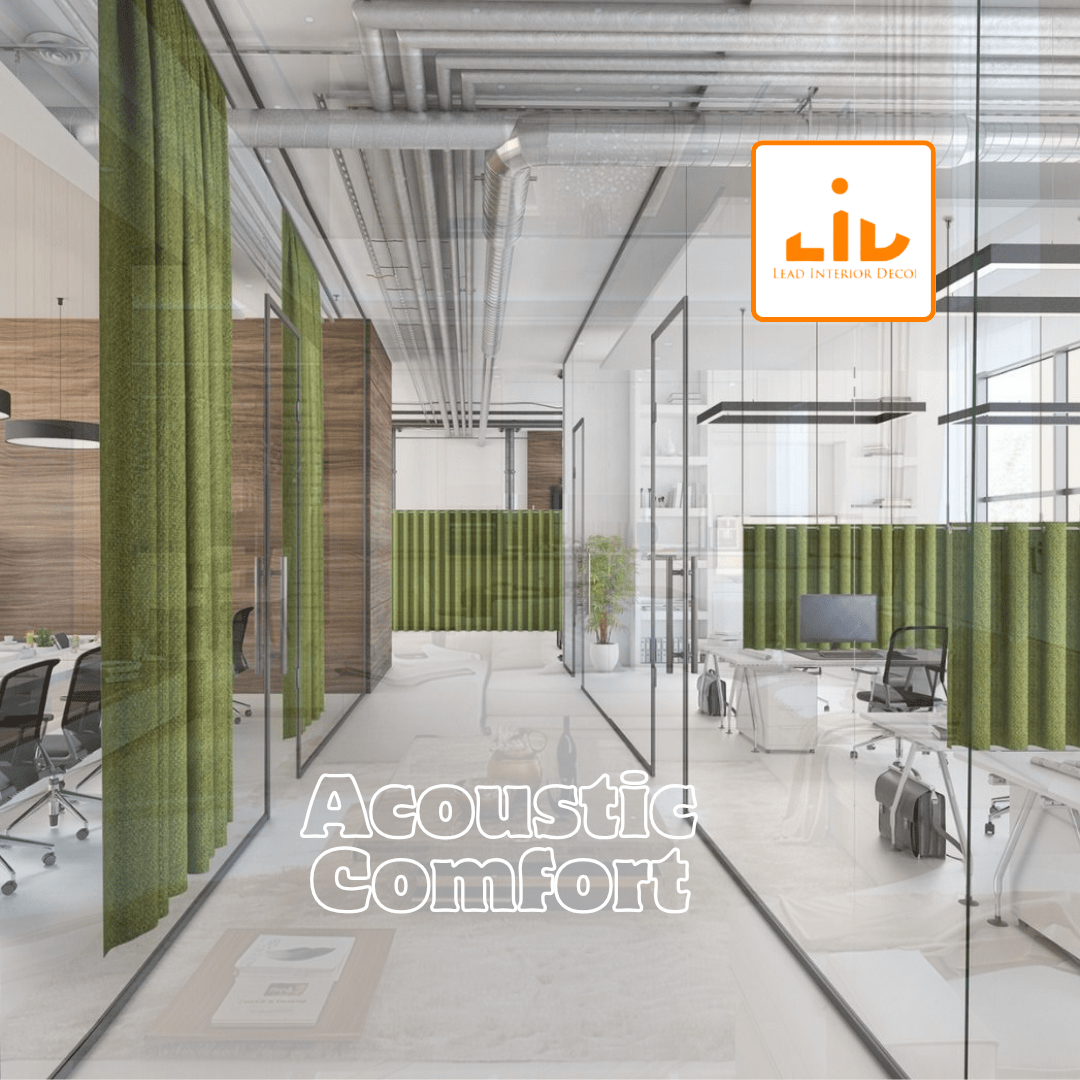
Acoustic comfort is essential for productivity and well-being in modern offices. Open-plan layouts often cause noise distractions, leading to stress and decreased focus. The essay will discuss soundproofing and noise-reducing furniture to enhance acoustic comfort in workplaces.
The Impact of Poor Acoustics on Productivity
The adverse effects of inadequate acoustics are recorded. Furthermore, excessive noise disrupts mental performance, memory recall, and problem-solving ability. In addition, background noise harms employee performance, increases errors and absenteeism, while poor acoustics hinder communication, raising voices and causing strain. Consequently, in a cutthroat business environment, such problems can translate into decreased efficiency, decreased innovation, and ultimately, bottom-line damage.
Soundproofing Strategies: Stopping Noise Transfer
Soundproofing is all about stopping the introduction of noise into or outside of an office room. This involves addressing the physical office building, i.e., walls, floors, ceilings, and windows. Some effective soundproofing solutions are:
Wall and Ceiling treatments: Adding mass to walls and ceilings is a fundamental soundproofing technique. Attach heavy material, such as soundproof gypsum board, mass-loaded vinyl, or acoustic panels, to walls and ceilings to achieve this. In ceilings, suspended ceiling acoustic ceilings with high Noise Reduction Coefficient (NRC) ratings perform optimally in reducing sound reflections and reverberation.
Floor Isolation: Impact noise, such as footfalls, is one of the predominant sources of disturbance in multi-story buildings. Floating floors and resilient under layments can easily minimize impact vibrations.
Door and Window Replacement: Doors and windows are typically weak spots in soundproofing. Replacement of ordinary windows with double-glazed or triple-glazed windows containing laminated glass can significantly reduce noise entry from the exterior. Similarly, solid-core doors with effective seals are more effective at blocking sound compared to hollow-core doors.
Lead Interior’s expertise lies in analyzing the specific requirements of each office building and recommending tailored soundproofing solutions that address specifically the matter of noise transfer.
Noise-Reducing Decor: Absorbing and Diffusing Sound
While soundproofing blocks noise transmission, noise-reducing decor focuses on absorbing and diffusing sound within a space. This involves strategically incorporating materials and design elements that minimize sound reflections and reduce reverberation, creating a more comfortable and focused environment. Key noise-reducing decor elements include:
Baffles and Acoustic Panels: Fabric-wrapped acoustic panels trap sound energy. You can glue them to the walls, ceiling, or hang them in the shape of baffles to reduce reverberation and improve the intelligibility of speech. Acoustic baffles work most effectively in open spaces where a lot of coverage is needed.
Soft Furnishings: Soft furnishings such as carpets, rugs, and upholstered furniture play an important role in sound absorption. The dense high pile of carpets is particularly effective at sound reflection and impact noise absorption.
You can use acoustic screens and dividers to create quieter spaces within open-plan offices. They are freestanding panels or modular systems and provide visual and acoustic screening between workstations.
Plants: Plants can also be used as natural sound absorbers, reducing noise levels and cleansing the air. Strategically placed plants will also enhance the decor of the office space.
Lead Interior’s design experts possess an in-depth understanding of acoustics and are able to effectively integrate sound-masking decor features in order to attain aesthetics and acoustically optimized office space.
Incorporating Sound Masking Systems
In some cases, additional technology will have to be inserted to cover residual noise. Sound masking systems introduce soft, ambient sound to cover up speech and other disruptions for the sake of concentration. Sound masking systems do not involve playing music or blaring sounds, but instead craft a constant and non-obtrusive soundscape to enhance privacy and reduce the intelligibility of distant conversations.
Conclusion: Partner with Lead Interior for Ultimate Acoustic Comfort
Acoustic comfort is a critical aspect of a healthy and productive work environment. Through the integration of soundproofing and the adoption of noise-reducing furniture, businesses can create offices that facilitate concentration, collaboration, and employee well-being.
Lead Interior has the experience and knowledge to identify your office’s specific acoustic needs and design bespoke solutions to meet your goals and stay within your budget. We guide you through it, from concept to installation, providing you with a unique solution. We aim to deliver exceptional results.
Come visit our showroom and experience firsthand the difference that acoustic design can make. Contact Lead Interior today to schedule a consultation and discover how we can turn your office into an oasis of productivity and serenity. Let us help you create a workplace where your employees can thrive.
